Introduction
Managers often want to link employees' pay to profit or turnover. This is understandable and, at first glance, seems logical. In fact, we earn money — we can 'share' with the employees; if we did not earn, then no one is to blame. This is especially typical for new companies/sectors (although it should be noted that managers of large enterprises also often harbour these thoughts). In practice, trade enterprises often prefer to pay ‘from turnover’, whilst manufacturing enterprises favour paying ‘from profit’.
It is also often assumed that linking pay to profit or turnover motivates employees. Arguments in support of this assumption have already been published in abundance (on the net, in journals, in books) – so we shall not repeat them here.
Instead, we shall do something else. Since this method of motivation has a variety of significant flaws, which are almost not spoken of, but which are often faced by managers and entrepreneurs, we shall write only about them. We shall therefore focus on why the pay system needs to be changed and why employees should not be paid a percentage of turnover or profit.
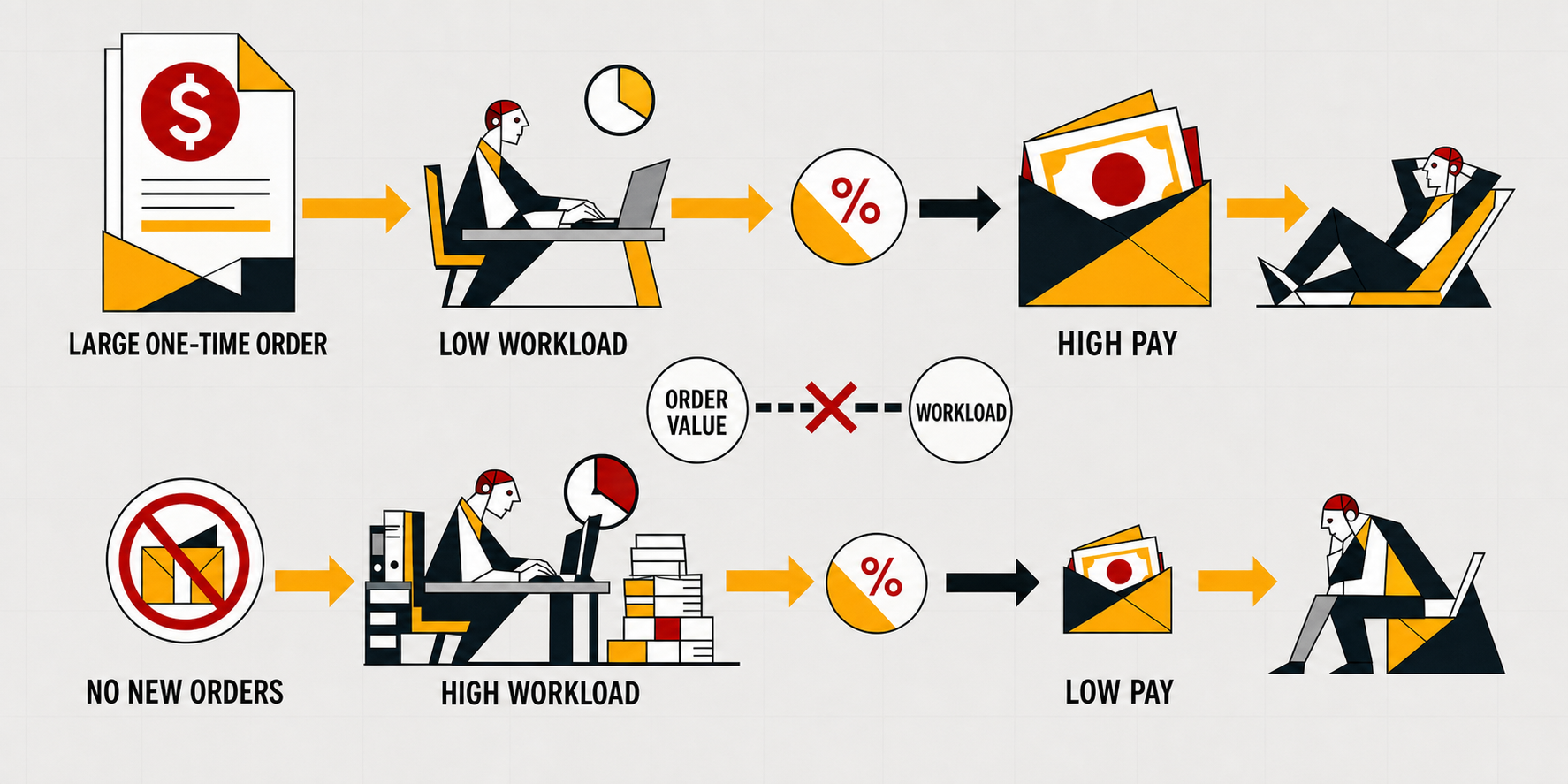
Shortcoming 1: It is often overlooked that there is no intrinsic link between transaction price and labour intensity
Consequently,
1.1. A significant, sometimes accidental, one-time order does not entail an increase in workload; however, the salary rises and employees may consequently relax their efforts.
Conversely, at the outset of working with a much-anticipated customer, when no further orders are expected, employees are keen to understand why their salaries have decreased compared to the previous 'profitable' month, despite dedicating additional effort and extra time.
1.2. Employees might subconsciously develop a disdain for lower-priced products and services, leading them to avoid tasks associated with these items.
This sentiment can extend to customers purchasing such products. As a result, in some stores, a salesperson may be nowhere to be found near the coffee-maker and coffee-grinder display (unlike, for example, near the projection TV display).
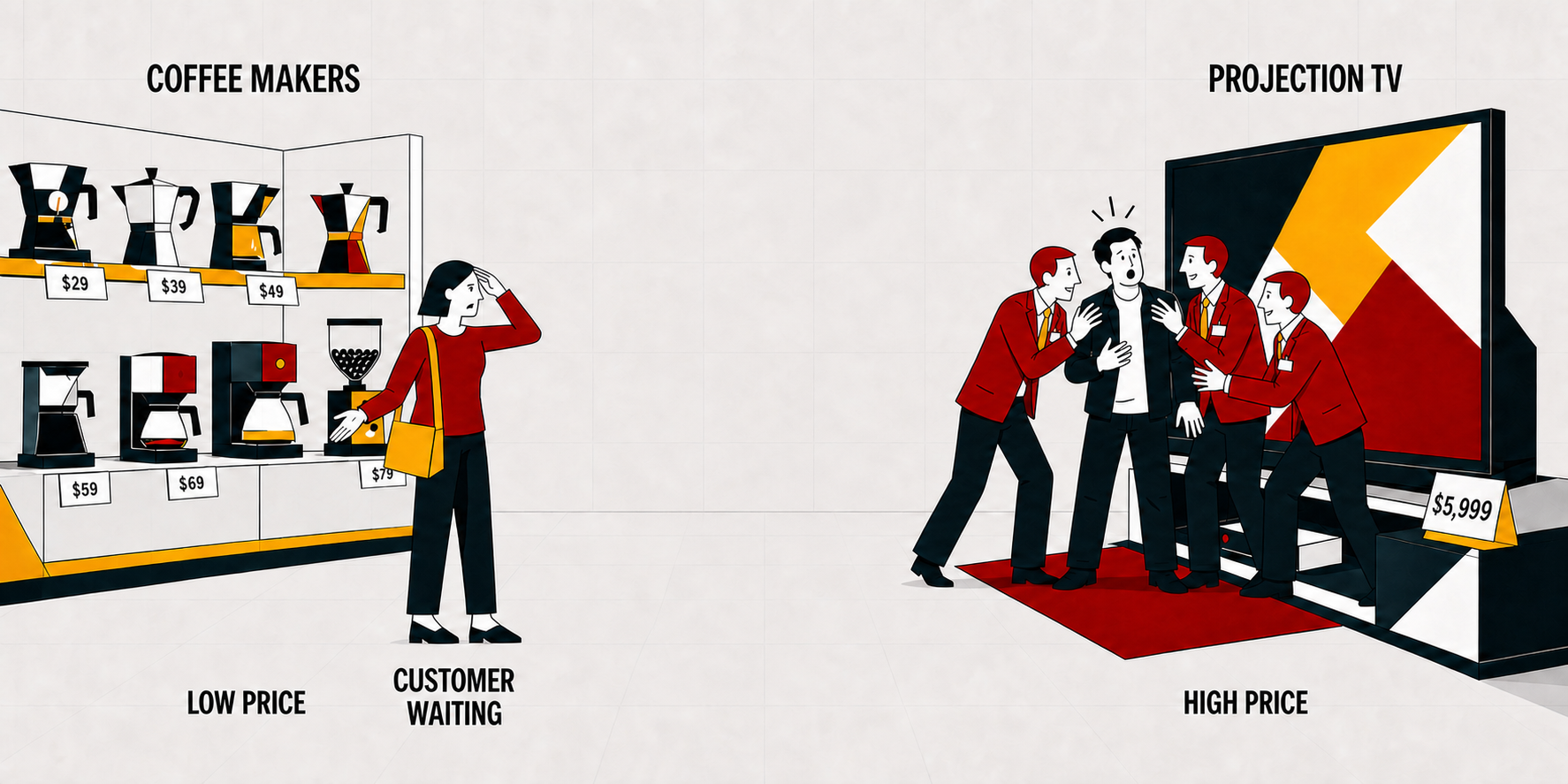
As a consequence, the bonus scheme becomes "opaque". The correlation between salary and work efficiency becomes obscured.
Shortcoming 2: It fails to recognise that pay is only weakly related to the size of the business
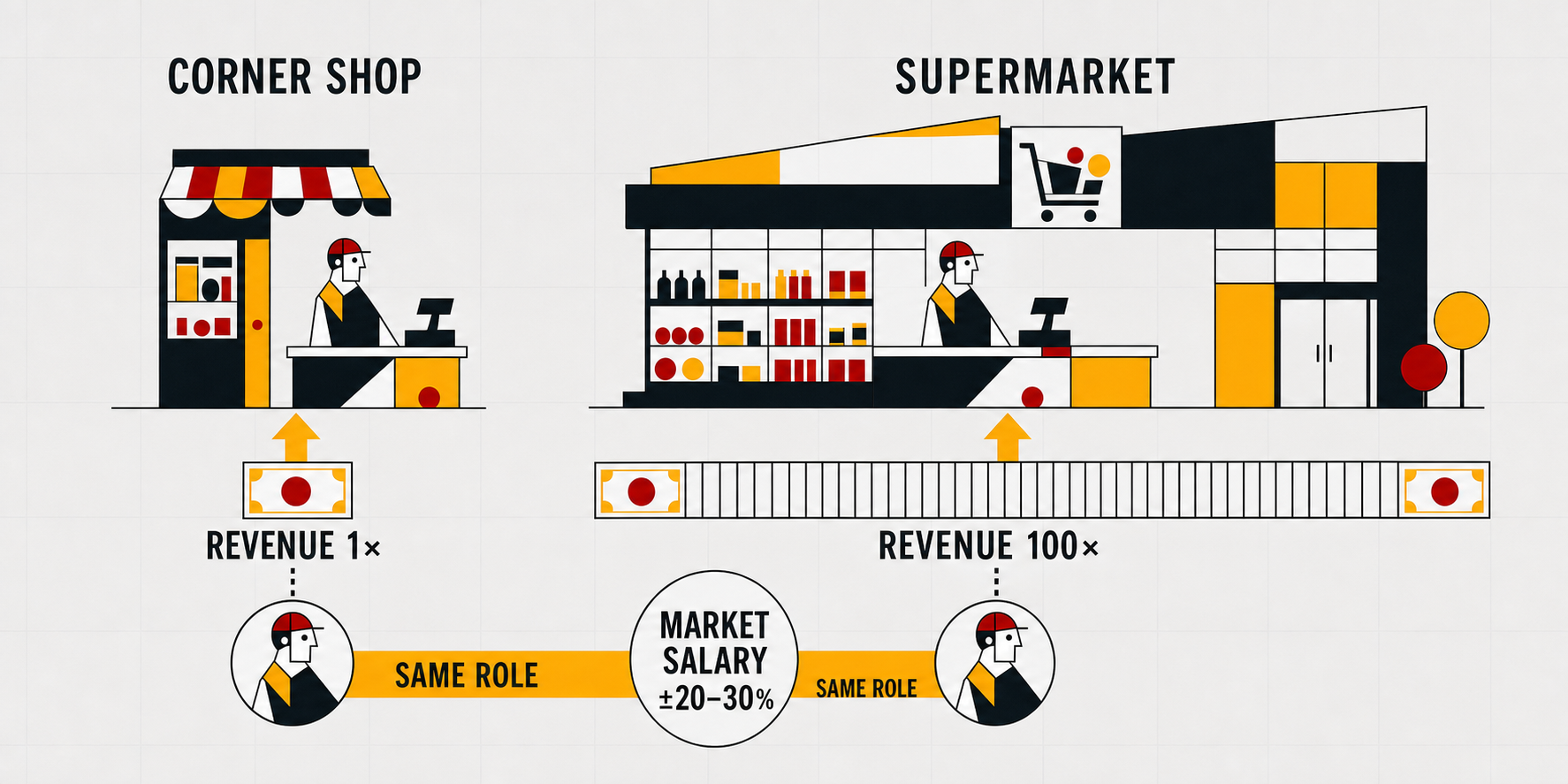
Naturally, a valuable employee should earn more, whilst a less competent one should earn less. Even so, the salaries of comparable employees across different companies typically do not exhibit significant variance.
They might differ by 20–30%, but not to the extent of doubling, tripling, or even increasing tenfold. Conversely, the revenue of a large supermarket may surpass that of a small corner shop by hundreds of times.
This suggests that when formulating a business plan, it is crucial to consider the market rate for a specialist.
Should the costs imply that profitability is unachievable, then the entrepreneur must reassess the feasibility of their business concept rather than transferring the responsibility of financial sustainability onto their employees ('No profit – no salary').
Note (here and below): With the 'percentage model', several of the shortcomings listed herein can be observed within the same company. Therefore, the examples may sometimes mirror one another.
Shortcoming 3: Failure to recognise the market value of specialists and an unconscious loss of management functions
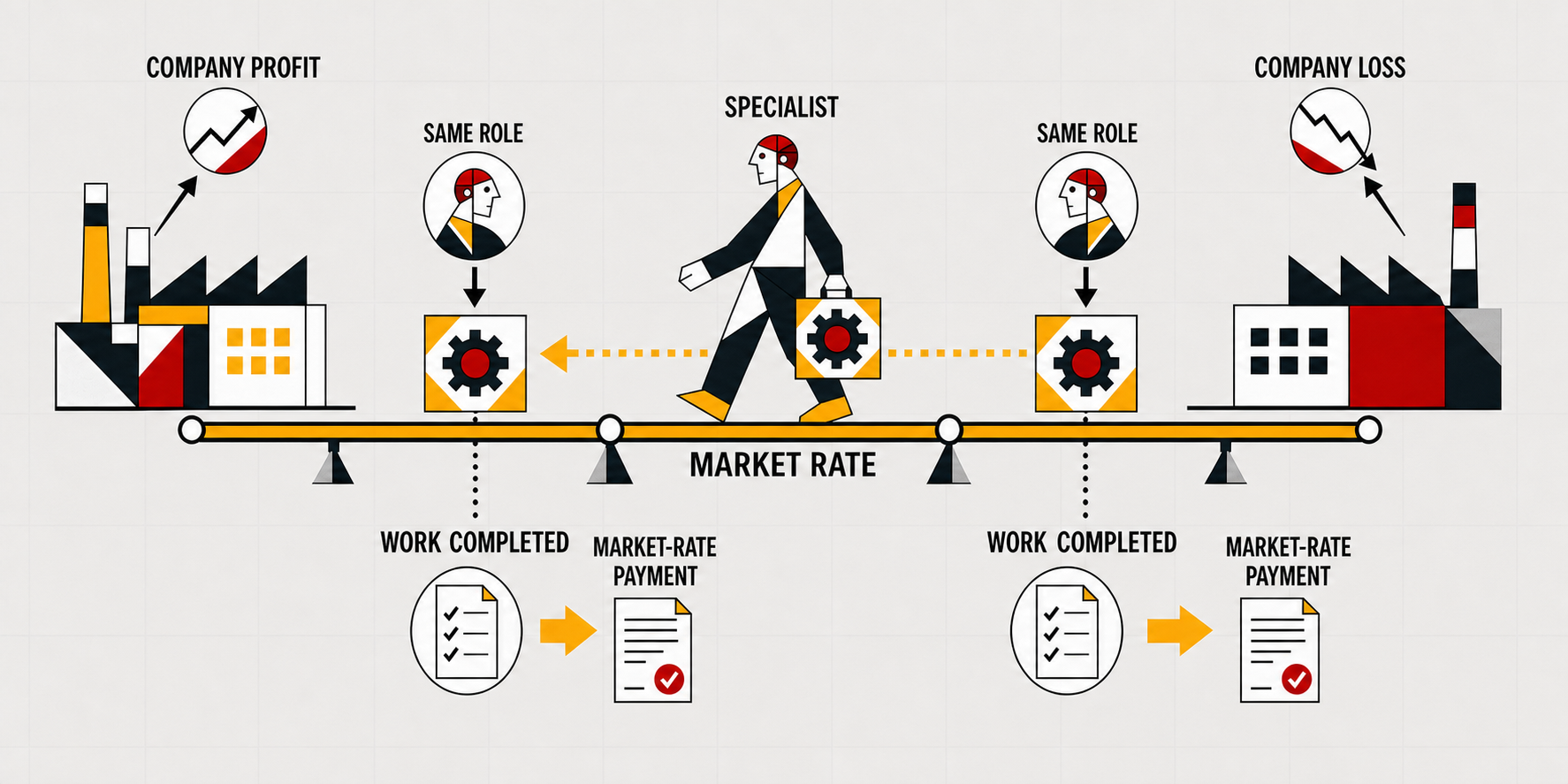
There are specific professions in the labour market, each with its price. As managers, we assign tasks for completion, and there is a cost associated with these tasks.
A question we perpetually ask ourselves is, 'How much is this specialist paid in the market?'
These data should serve as a benchmark when deciding on salaries.
This implies that you should align yourself with the market cost of the specialist, regardless of the profits generated by your company.
An employee in a factory may produce a component. This component could be expensive or affordable, scarce or widely available, crafted from gold or steel... However, an employee will move to another factory if offered higher pay for a similar role (how components are sold at a particular factory does not matter).
To retain an exceptional employee, you will inevitably need to offer a salary slightly above the average market level. Conversely, a subpar employee should be compensated less (but not excessively lower, as it is better to dismiss a poor performer than to tolerate an underpaid loser).
In any case, it is the Entrepreneur's task to create a 'reason for profit' under specific market conditions. Indeed, this is why the Entrepreneur privatises profit as the result of their activity. In contrast, the result of an administrator's work is a well-trained salesperson; the result of a salesperson's work is exemplary service to a Customer, while the result of a storekeeper's work is the timely shipment of goods from stock.
And if the company makes a loss — business is business — are we really not going to pay, or not going to pay in full, the person who did their job properly and was not responsible for that loss?
A company that is functioning normally sells its products according to its price list and does not wish to receive money 'from the profit' of the Customer. That is, the company prefers to receive a specific sum for the products as evaluated by itself and the market. And this is as it should be!
But a company that is functioning normally should not assume its employees hold another viewpoint when they render to it their services.
Shortcoming 4: Market development trends are not considered
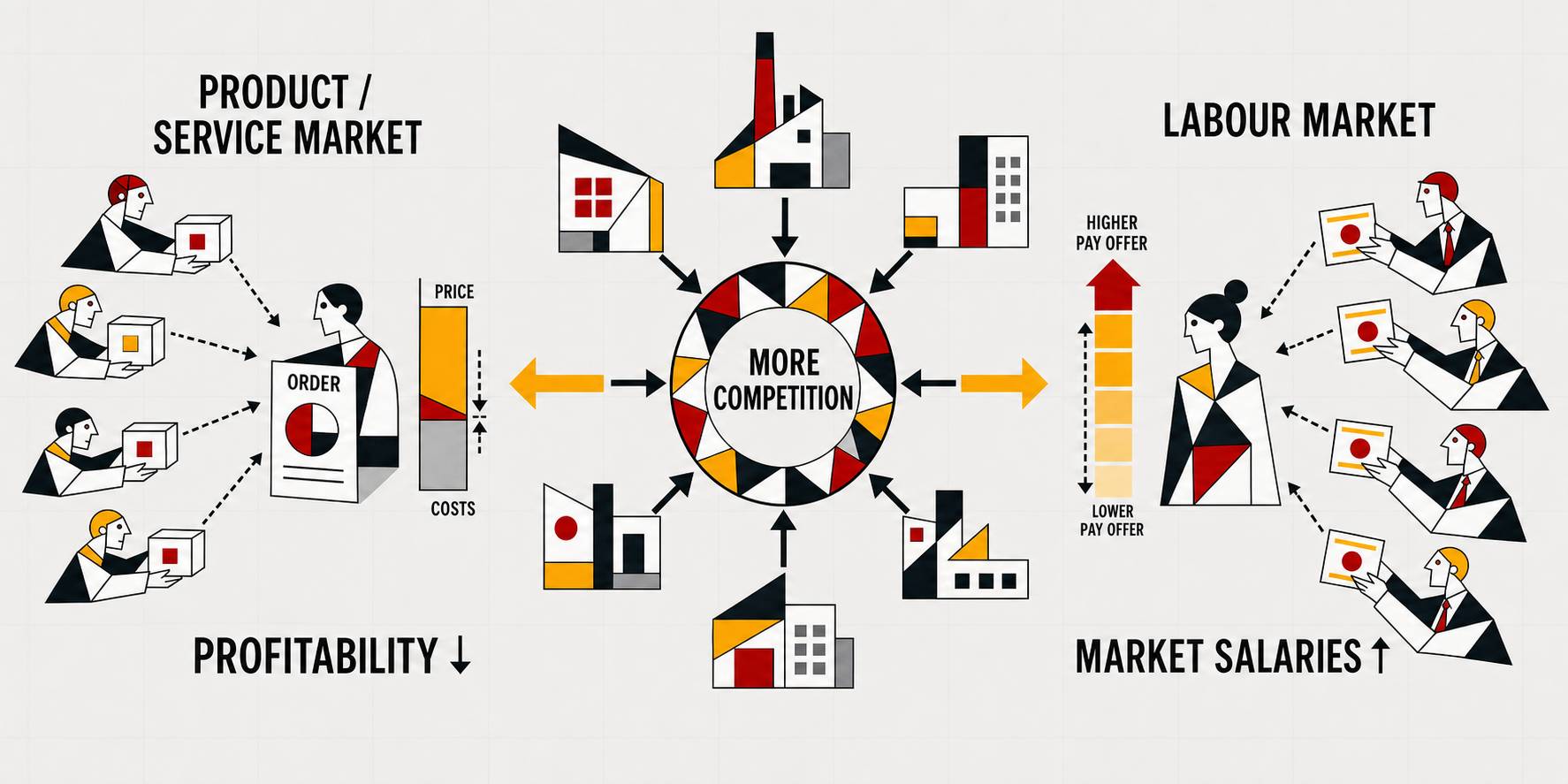
The profitability of services (or goods) declines when competition intensifies, while the average market salaries often rise in response to the same increase in competition.
Since these two factors are unrelated, organisations find themselves compelled to engage in artificial adjustments to align them. Regrettably, there is no logical explanation for the such manipulations.
Shortcoming 5: Incentivising "Angels", not people
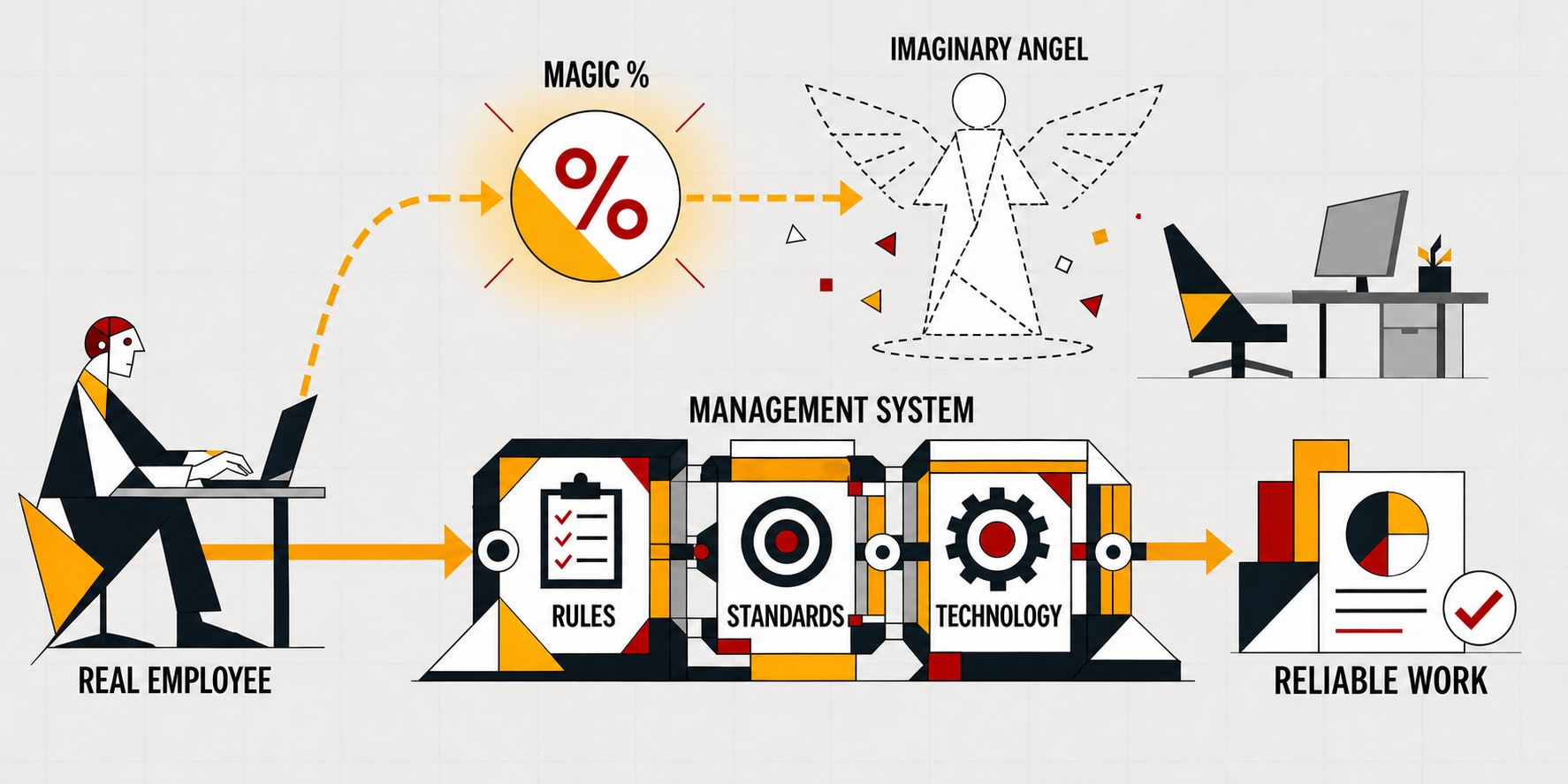
It is important not to substitute the manager's work with the thesis about a "magic formula of motivation" (for example, in the form of "the right percentage"), which supposedly turns an ordinary employee into an “angel” who will spread their wings of their own accord (and it is crucial only to find this "magic formula").
Roosevelt was once asked, while reading Karl Marx, whether he liked Marxism. He replied: “A splendid theory. But only for angels.”
We adhere to a simple and logical principle: a real business should not be built with "angels", but with "those we already have around us". And we must develop a system that works effectively with "regular" employees.
Of course, it would be wonderful if we had outstanding employees; we would recognise them immediately and reward them accordingly.
However, system planning and the establishment of management rules should be based on "ordinary" employees, a significant proportion of whom, once given percentage-based pay, will work just hard enough not to overexert themselves.
They are unlikely to increase their own performance and the quality of their work, but will start to question not only the "fairness of the split" but also margins, payments from customers, arguing about the cost of certain services, and suspecting you of sins that never occurred.
Shortcoming 6: Not taking into account the primacy of technology
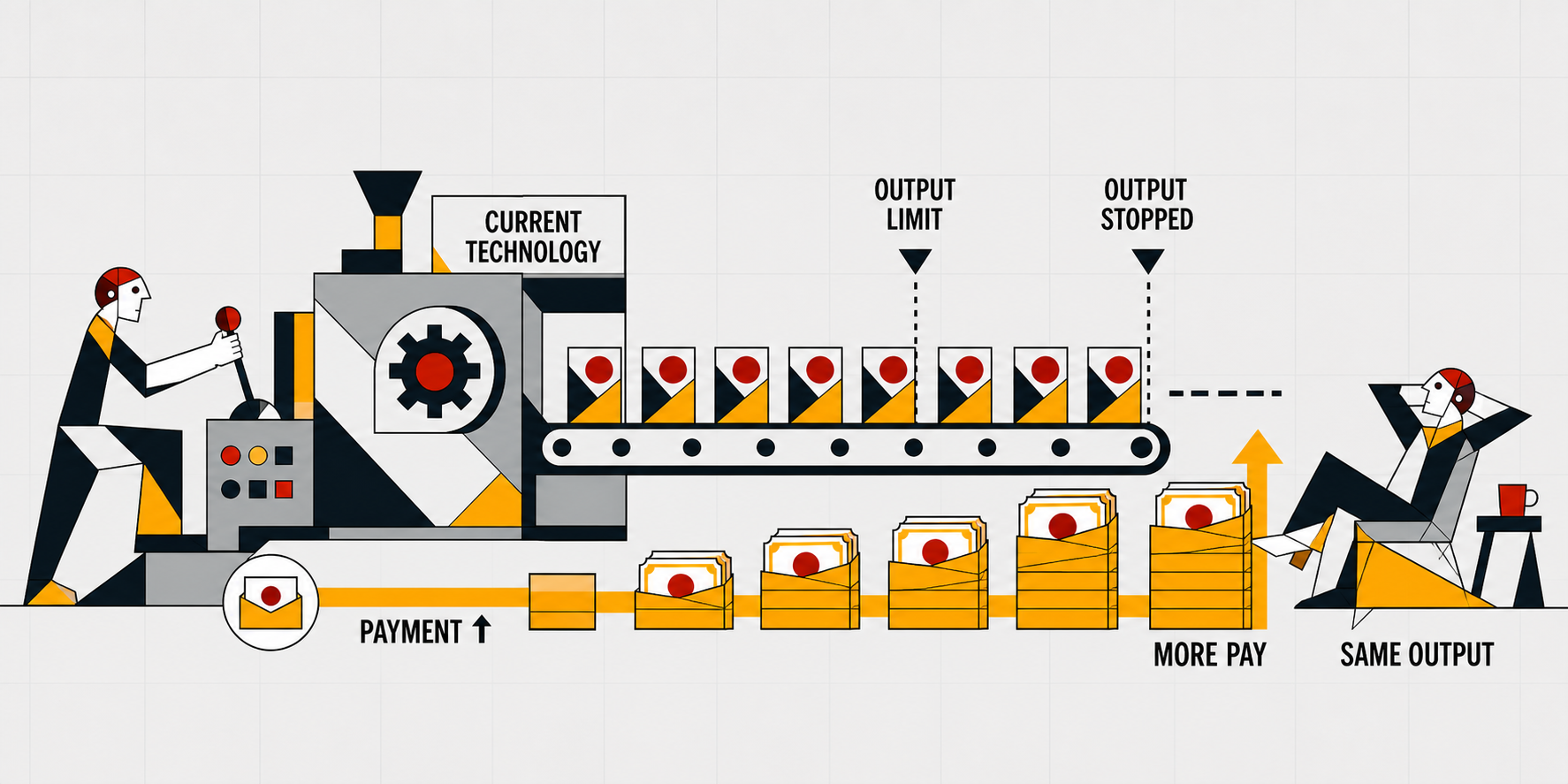
One should also not forget the following: under similar conditions, there is a maximum threshold that the employee (who works in a specific way or method, and follows specific principles, etc.) cannot exceed, no matter how much they are paid. Excessive payment, in this case, will only cause the employee to become complacent, and it may make them lazy.
Similarly, world records in the high jump over the last 30 years have increased by 15 cm, and in the next 30 years, they will rise by no more than another 10 cm (although athletes' incomes have increased by several dozen times).
Another example: Russian football players who play in the national leagues in half-empty stadiums, and who were humiliated in the European Championships and lost by a score of 1:7 against the team from Portugal, still received between $400,000 and $730,000 each for the disappointing year of 2004. Meanwhile, the "low level of the Russian team" is well known.
The entrepreneur should define the technological limits of their business as it currently stands.
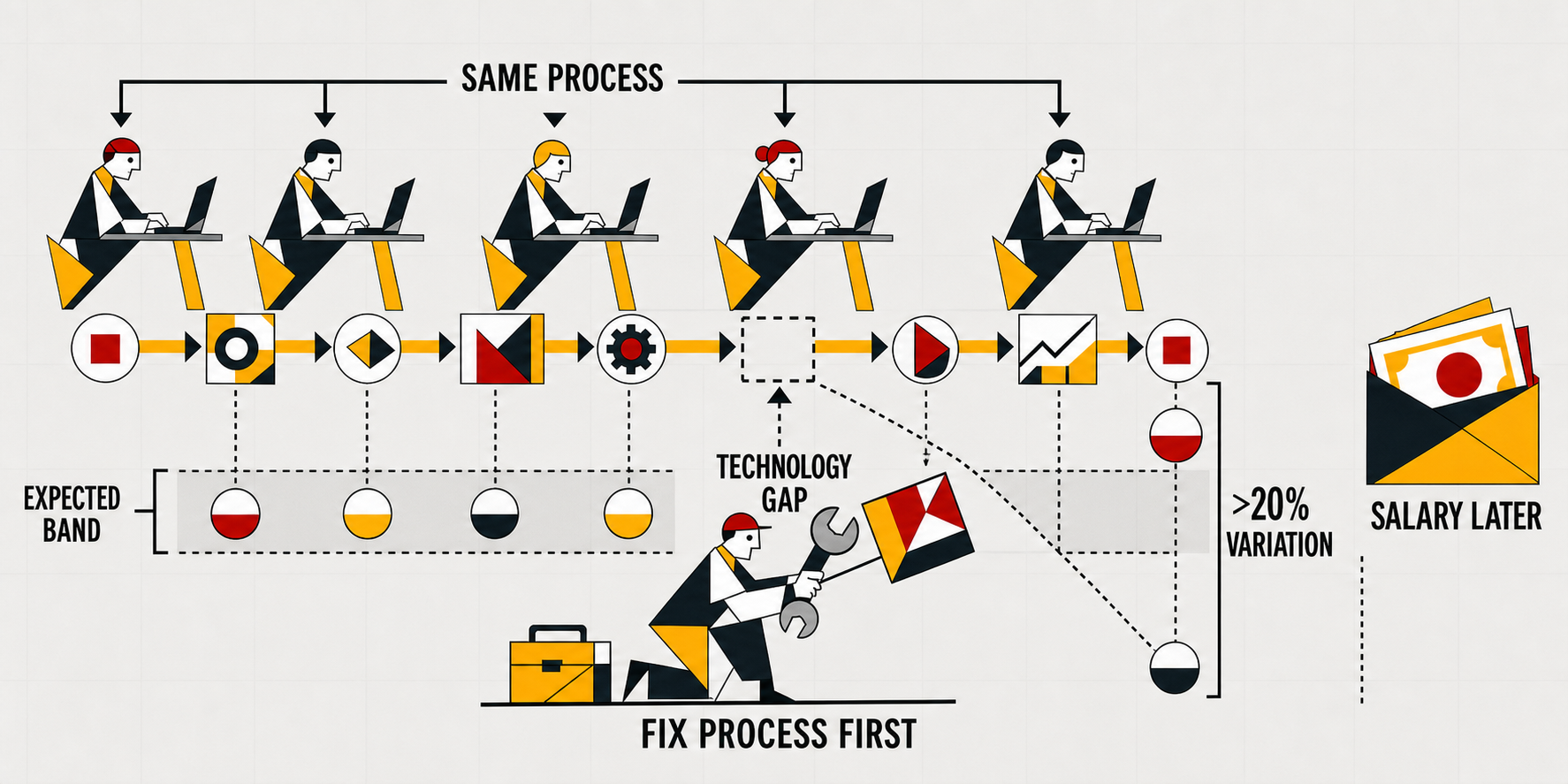
For instance, an employee (or team) who is actively and professionally selling will generate more revenue than a passive one. By comparing the results, one can identify the difference. However, in a well-organised business, the gap in sales is within reasonable limits.
If there are still significant variations in effectiveness (more than 20%), depending on effort, then this indicates a “hole" in the sales technology. This issue should be addressed first, before returning to the matter of salaries.
Shortcoming 7: With a "percentage system" of salary ("from profit", "from turnover"), performance is "spontaneously" set by your employees
This illustrates how employees establish a standard if it has not been set by the manager.
Example (model):
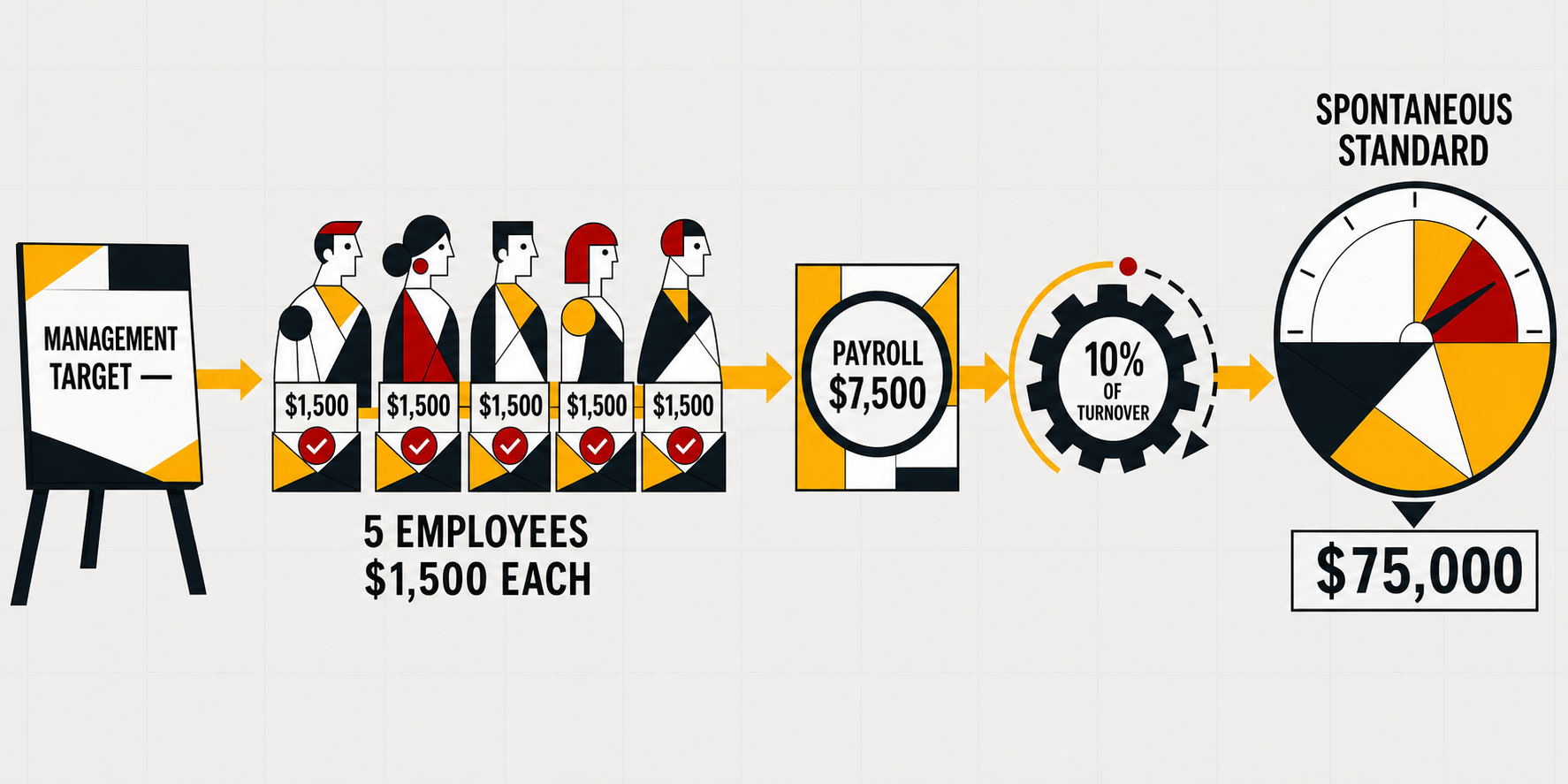
- The number of employees - 5 people.
- A salary which is sufficient for the employee, "without overworking himself" - $1,500.
- Percentage of the turnover paid to the employees - 10% (for example).
- "Spontaneous" wages fund - $7,500.
- "Standard" on turnover, spontaneously set by the employees of the enterprise - $75,000.
We can believe that "there is no benchmark" and "people are trying", but it is better to set target benchmarks for your business (by managing the business with ideas and parameters of a business plan, not the wishes of employees) and organise the work in such a way that average people might reach them without acts of self-sacrifice.
The know-how to organise work in this manner is the key skill of the manager and entrepreneur.
Conversely, avoiding this organisational work and replacing it with the idea of a “magic formula for motivation” is a familiar form of managerial laziness; the many theories of piecework and the self-satisfaction they provide are merely philosophical justifications for that laziness.
Shortcoming 8: When the number of orders is low, the "percentage model" conceals downtime in production
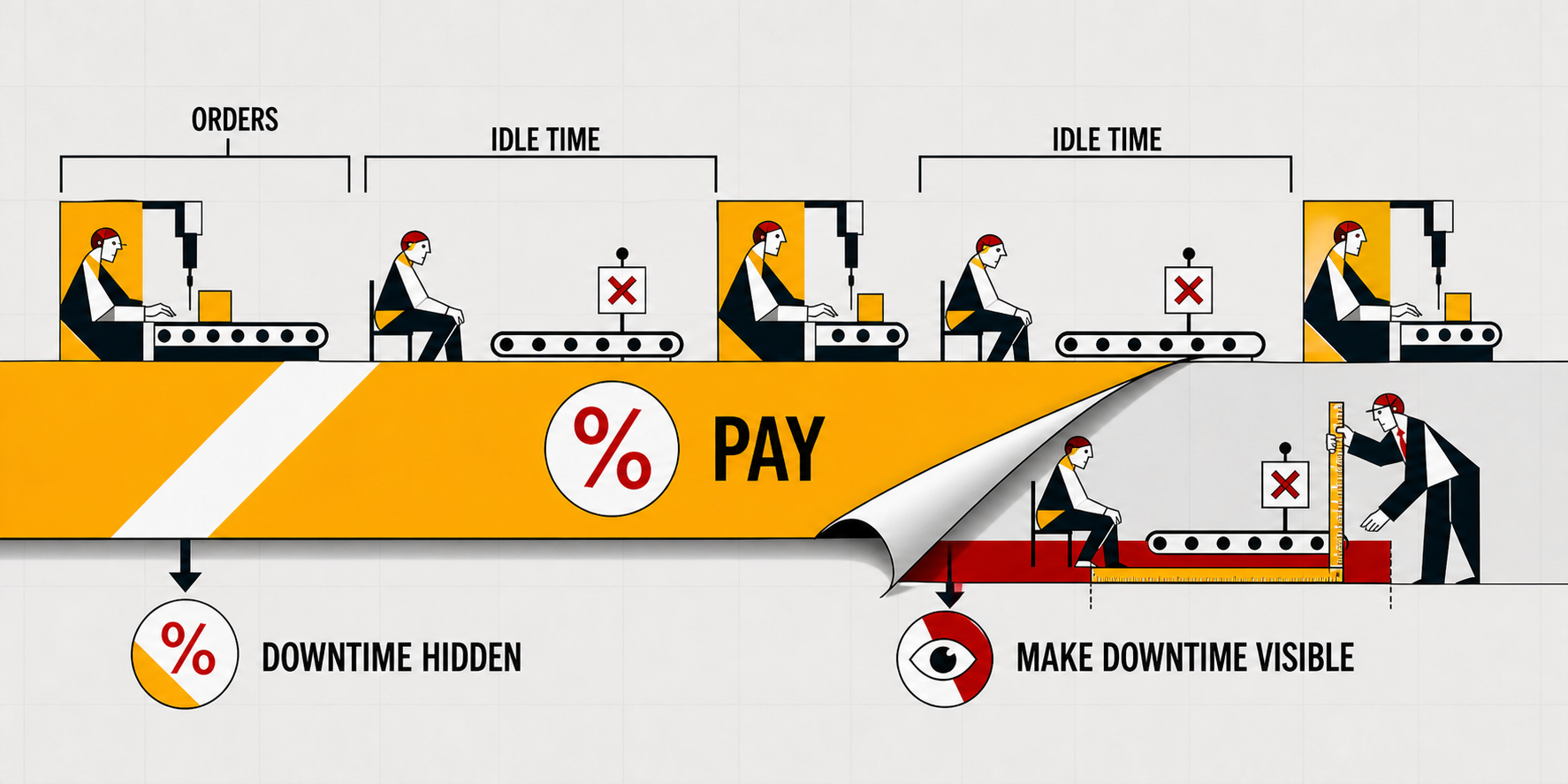
This is harmful. When standardising work, idle time must be identified explicitly.
And finally,
Shortcoming 9: The "percentage model" obscures the contribution of a particular employee
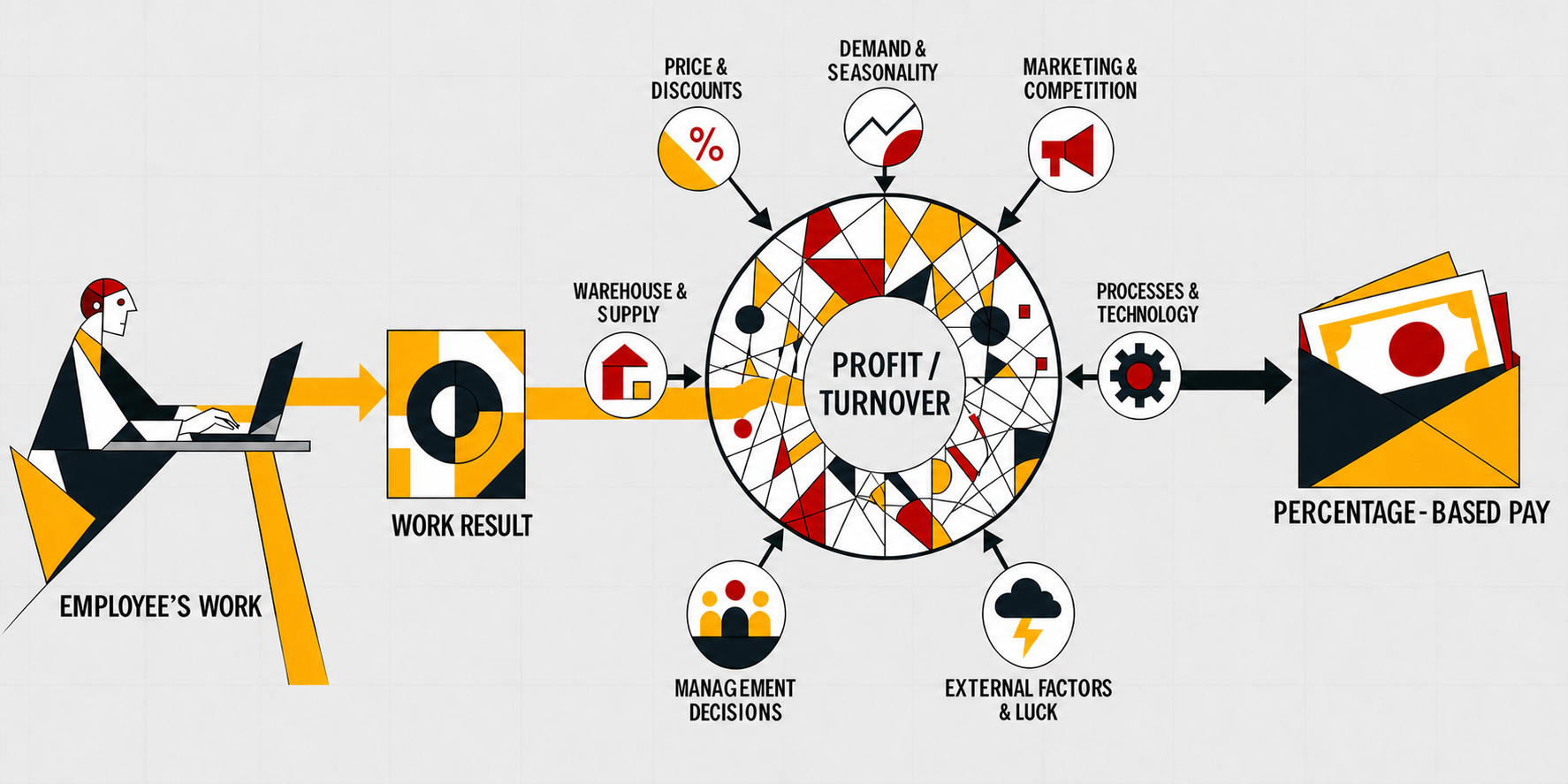
Because many factors affect profit and turnover, the link between pay and work results is not visible. The bonus is therefore opaque: it becomes an arbitrary figure whose origin employees do not understand.
Summary
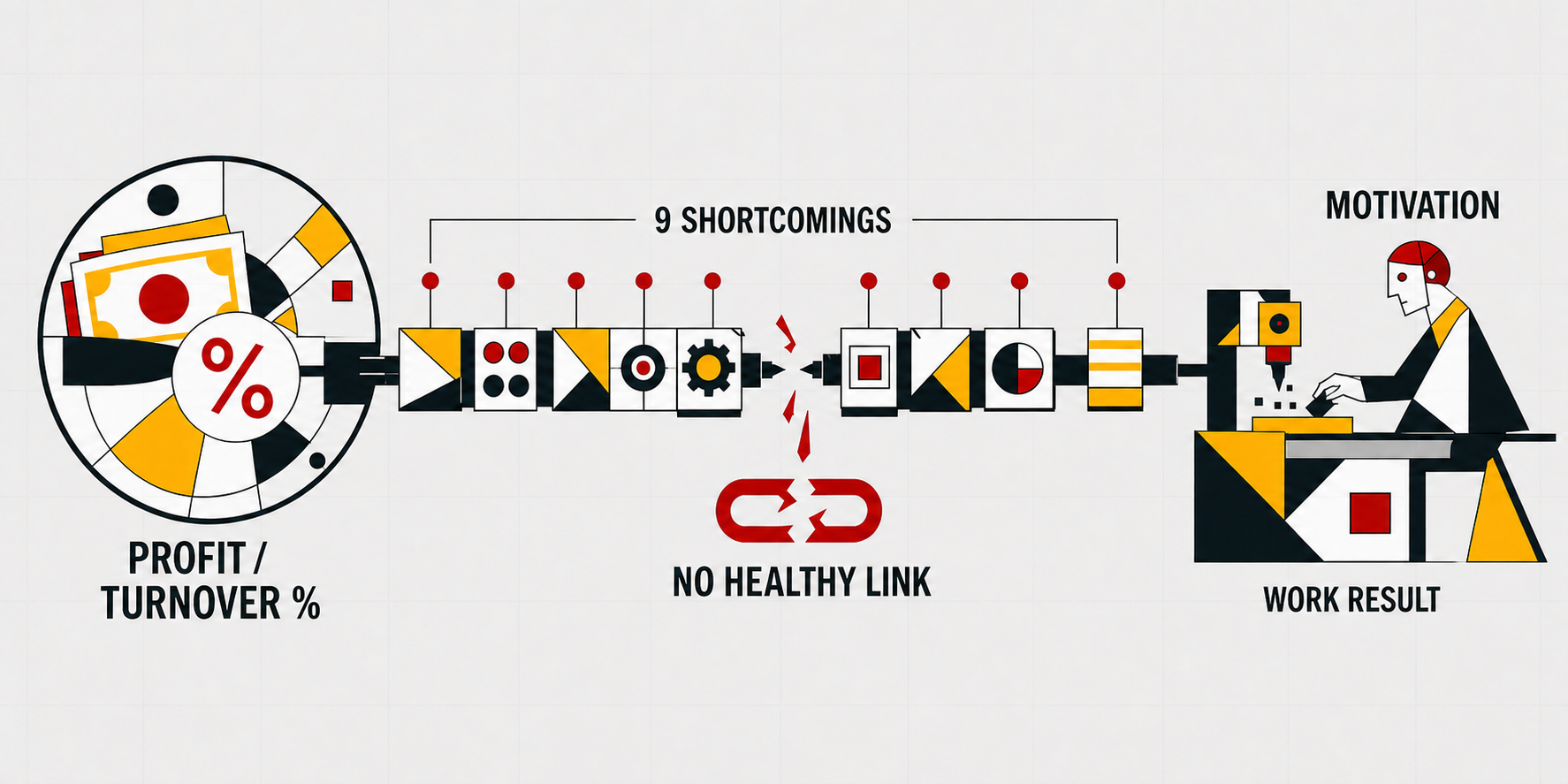
According to the authors, the nine aforementioned shortcomings are sufficient to conclude that: "Contrary to numerous mantras on the topic, the percentage of profit/turnover does not have a healthy relationship with motivation".
Acknowledgements
The authors thank Xenia Tkalich (TRIZ-RI Group) for her help in writing this article. The authors thank their colleagues on the Forum at www.triz-ri.ru/forum for the productive conversation on the topic.